Why Brands Are Switching to Pouches for Sustainability Benefits
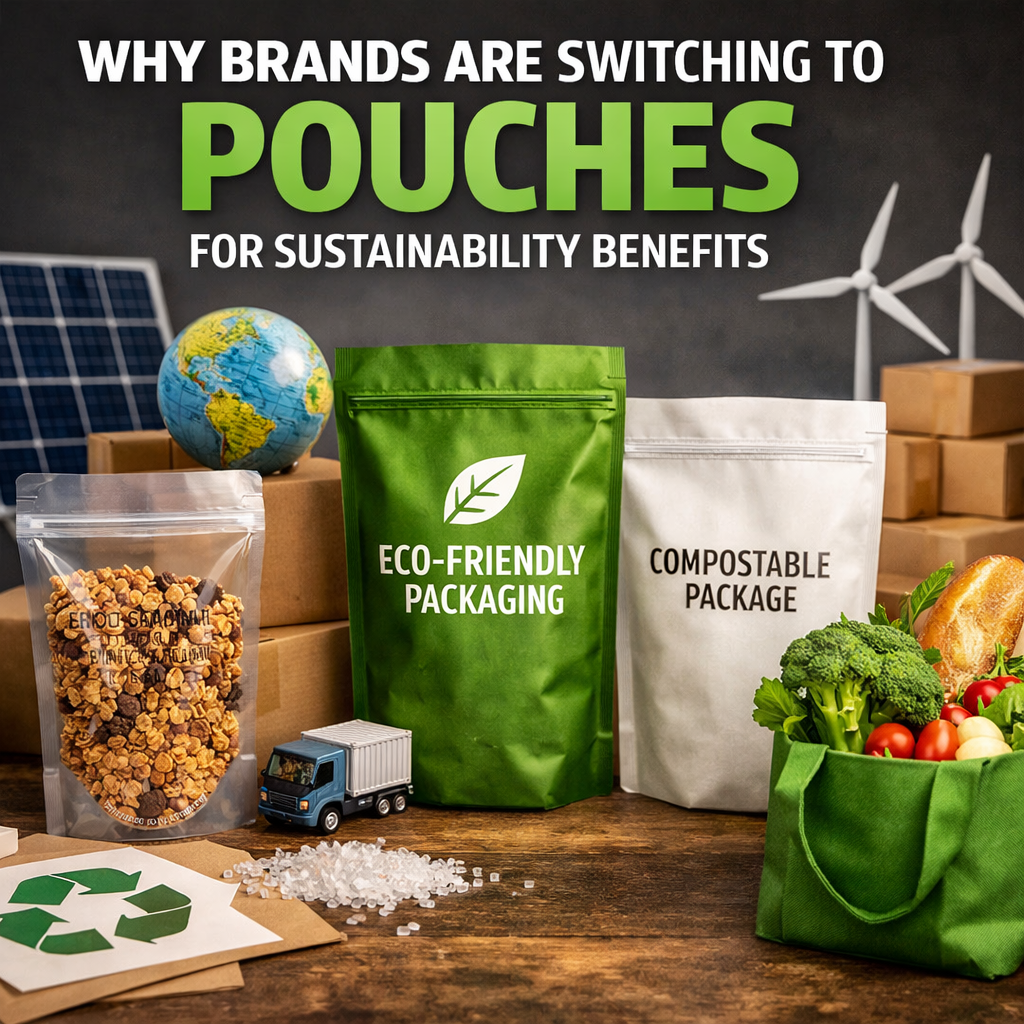
As sustainability continues to reshape consumer expectations and regulatory requirements, brands across industries are rethinking how their products are packaged. One of the most significant shifts in recent years is the move from rigid packaging formats—like bottles, jars, and cans—to flexible pouches. This transition isn’t just a trend; it’s a strategic decision driven by measurable environmental benefits, cost efficiencies, and evolving market demands.
Reduced Material Usage
Flexible pouches require significantly less raw material compared to rigid packaging. A stand-up pouch, for example, can use up to 70% less plastic than a traditional bottle for the same product volume. Less material means:
- Lower resource consumption
- Reduced manufacturing impact
- Less waste entering the environment
This reduction directly contributes to a smaller environmental footprint from production through disposal.
Lower Transportation Emissions
Pouches are lightweight and compact, allowing more units to be shipped per truckload compared to bulky rigid containers. This improves logistics efficiency and reduces fuel consumption.
Key benefits include:
- Fewer trucks on the road
- Lower greenhouse gas emissions
- Reduced shipping costs
For brands with large distribution networks, this can translate into substantial sustainability gains.
Smaller Carbon Footprint
From production to disposal, flexible packaging generally has a lower carbon footprint than rigid alternatives. The combination of reduced material use and transportation efficiency plays a major role.
Additionally, many pouch structures are designed to:
- Minimize energy use during manufacturing
- Optimize supply chain efficiency
- Support life cycle sustainability goals
Advances in Recyclability and Materials
Historically, flexible packaging faced challenges with recyclability. However, innovation is rapidly changing that landscape. Today’s pouch solutions include:
- Recyclable mono-material films
- Post-consumer recycled (PCR) content
- Compostable and bio-based materials
Brands can now align their packaging with circular economy goals while maintaining product performance and shelf life.
Reduced Food Waste
Flexible pouches often incorporate features that help extend product freshness and usability, such as resealable zippers and high-barrier films. This helps reduce food waste—a major contributor to environmental impact.
Examples include:
- Better portion control
- Longer shelf life
- Improved product protection
Reducing waste at the consumer level is just as important as reducing packaging waste.
Consumer Preference for Sustainable Packaging
Today’s consumers are more environmentally conscious than ever. Packaging plays a critical role in purchase decisions, and brands that adopt sustainable solutions gain a competitive edge.
Flexible pouches offer:
- Modern, convenient formats
- Clear sustainability messaging opportunities
- Alignment with eco-conscious values
This shift isn’t just operational—it’s also a powerful branding advantage.
Space Efficiency in Retail and at Home
Pouches take up less space on store shelves and in consumers’ homes, reducing storage and display requirements. This efficiency contributes to:
- Lower retail energy usage
- Improved merchandising flexibility
- Reduced overall environmental impact
Switching to flexible pouches is more than a packaging update—it’s a meaningful step toward sustainability. By reducing material usage, lowering transportation emissions, improving recyclability, and aligning with consumer expectations, pouches offer a comprehensive solution for brands looking to minimize their environmental footprint.
As innovations in materials and design continue to evolve, flexible packaging will play an increasingly important role in building a more sustainable future—one pouch at a time.

Ready to Elevate Your Packaging?
Experience fast, quality printing tailored for your business. Let's talk today!

Explore Our Insights
Dive deeper into packaging expertise